Meteorologists are sounding the alarm as a winter weather system is set to roll in this weekend, bringing snow, icy conditions, and possible travel disruptions across several regions. Officials are urging people to stay weather-aware, especially if they have weekend travel plans or outdoor activities scheduled.
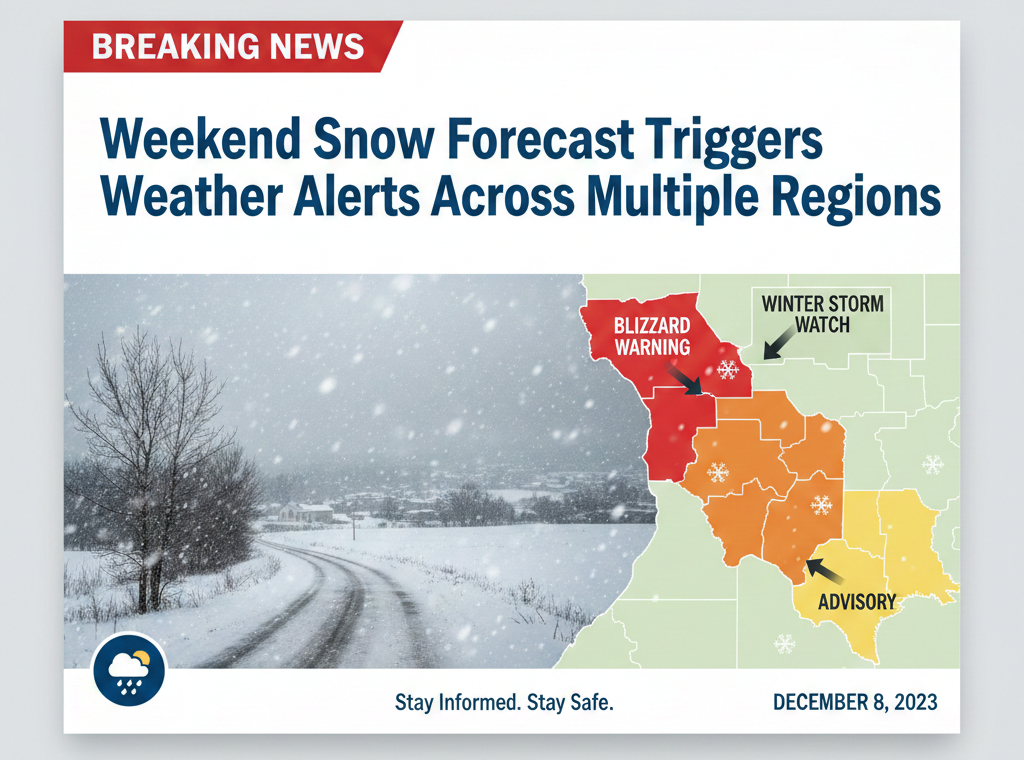
The system is expected to strengthen as it moves across the country, with colder air colliding with moisture-rich fronts. That setup could lead to widespread snowfall, gusty winds, and slick road conditions in multiple states.
Snow System Gaining Strength Before the Weekend
Weather experts say the developing storm could deliver steady snow over many hours, with the heaviest totals expected in northern areas and higher elevations. Some locations may see a mix of rain and snow early on, but colder temperatures could quickly flip precipitation to all snow.
Regions Likely to See the Most Snow
Forecast models suggest a range of impacts depending on location:
- Light snow and flurries in lower elevations
- Moderate to heavy snowfall in northern and mountain regions
- A rain-to-snow transition in parts of the South and Mid-Atlantic
In some areas, snow totals could reach several inches by Sunday night, especially where temperatures stay below freezing.
Weather Alerts Issued Ahead of the Storm
In response to the forecast, weather agencies have issued winter weather advisories and snow warnings for multiple regions. These alerts are meant to give residents a heads-up so they can prepare before conditions deteriorate.
What These Alerts Mean for You
Depending on your location, alerts could include:
- Hazardous travel advisories for highways and back roads
- Possible school delays or closures
- Disruptions to public transit and delivery services
Officials recommend limiting travel during peak snowfall and keeping emergency supplies on hand, including food, water, flashlights, and extra blankets.
Travel Disruptions and Power Risks Possible
Transportation crews are gearing up, pre-treating roads and staging snowplows in key areas. Airports in affected regions may also experience delays or cancellations as crews work to keep runways safe.
Winter Driving Safety Tips
If you have to be on the road, experts recommend:
- Check road conditions before heading out
- Keep your gas tank at least half full
- Pack an emergency kit with water, snacks, and a phone charger
- Slow down and leave extra space between vehicles
Heavy snow combined with strong winds could also knock down power lines, leading to isolated outages in some areas.
Cold Air to Stick Around After the Storm
Even after the snow winds down, chilly temperatures are expected to linger into early next week. That could keep snow and ice on roads and sidewalks, increasing the risk of accidents and slips.
What’s Next in the Forecast
Meteorologists are tracking another potential system behind this one, meaning winter weather could stay active for several days. Forecasts may shift as the storm gets closer, so staying updated will be important.
Stay Weather-Aware This Weekend
Weather experts stress that winter storms can change fast, so keeping an eye on the latest updates is key. Whether you’re traveling or staying home, taking a few simple precautions can help you stay safe and avoid major disruptions.
As the weekend approaches, residents in affected regions are encouraged to monitor local forecasts and heed official warnings as this winter system moves in.